

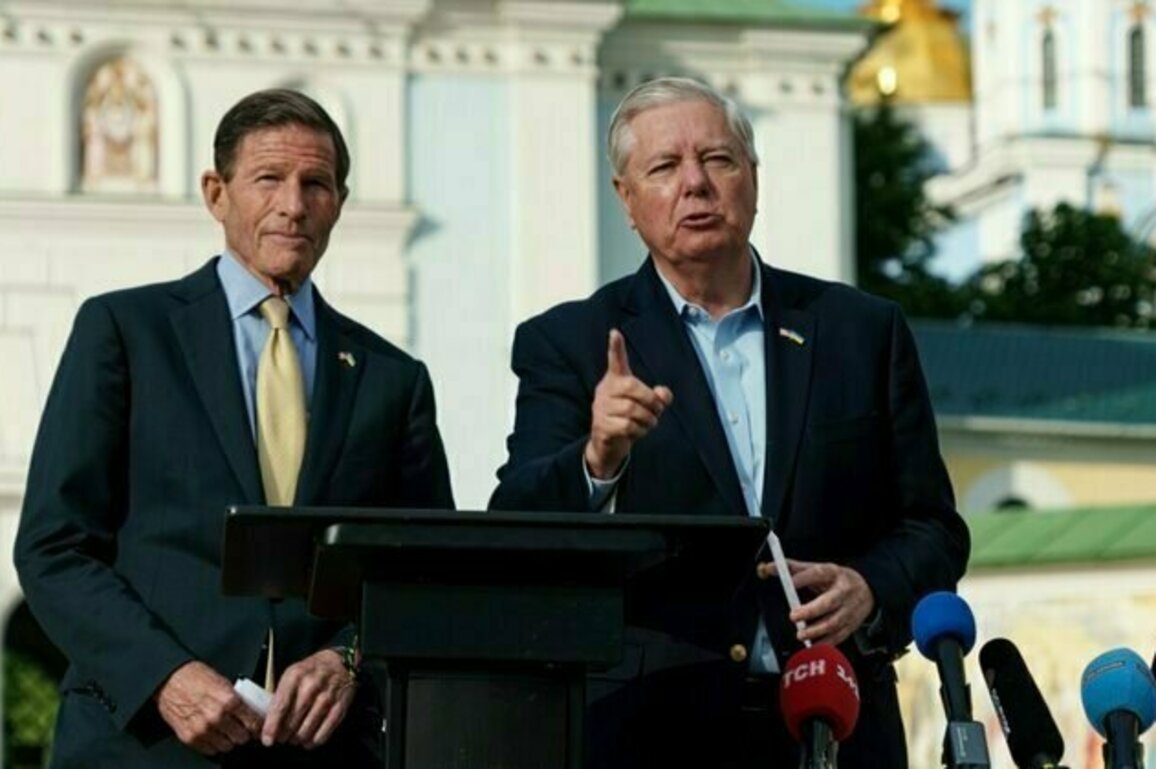
WASHINGTON -- The US Senate has fast-tracked a bipartisan bill to label Russia a state sponsor of terrorism if it fails to return thousands of Ukrainian children it haskidnapped, deported, or forcibly removedduring its war against Ukraine.
It is the second time lawmakers have proposed such a bill since the start of Russias full-scale invasion in February 2022. Only four countries - Iran, North Korea, Syria, and Cuba - are currently designated by Washington as state sponsors of terrorism, a label that carries financial consequences as well as symbolic significance.
The bill comes as US lawmakers grow increasingly frustrated with Russian President Vladimir Putin, who has stepped up air attacks on Ukraine in recent months and, many in the West say, hasrefused to negotiatea peace deal in good faith. Russia earlier this month launched drones that crossed into Polish airspace and Polish forces shot several of them down, the first NATO engagement with Russian weapons since the war began.
What Does The Bill Do?
If adopted, the Designating the Russian Federation as a State Sponsor of Terrorism Act would require the US secretary of state to submit a report to Congress within 60 days certifying that children who were kidnapped, deported, or forcibly removed from Ukrainian territory, including Russian-occupied areas, have been safely reunited with families or guardians and that their full reintegration into Ukrainian society is underway.
SEE ALSO:
Unlawful Transfer: Inside The Russian System To Take Ukraine's Children
Kyiv estimates that more than 19,500 Ukrainian children are being held by Russia. If the secretary of state is unable to certify their return, they shall immediately designate Russia as a state sponsor of terrorism.
What's The Potential Impact?
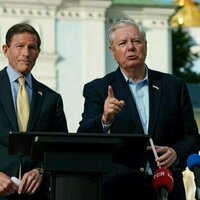
Designation as a state sponsor of terrorism would make it very difficult for [anyone] to do any above-board business with Russia, Republican Senator Lindsey Graham, one of four sponsors of the bill, said when theyintroduced the legislationon September 11.
But the United States has already imposed sweeping penalties on Moscow, including restrictions on exports of US technology to Russia and thousands of sanctions on key Russian industries, companies and individuals.
This means that while adoption of the bill would make it harder to lift sanctions - something US President Donald Trump has made clear he would like to do if a peace deal is reached -- it would likely only inflict minor damage on Russias economy unless Trump were to impose secondary sanctions as an additional instrument to blunt the Kremlins capacity to fight the war.
Secondary sanctions penalize foreign countries, companies, and individuals for violating US sanctions, in this case, doing business with Russia. China has played a key role in helping Russia subvert US sanctions: It continues to supply Russia with banned technology and other dual-use goods and it also buys Russian natural resource exports, providing fuel for Russias war economy.
SEE ALSO:
China's Defense Universities Help Russia Offset Sanctions And Export Controls, New Research Shows
Trump could seek to sanction Chinese companies under the Terrorism Sponsors legislation, but that could undermine one of the main goals of his administration -- securing a trade deal with Beijing. Trump may meet with Chinese President Xi Jinping in October to seek to conclude a deal.
Moreover, Trump doesn't need this legislation to impose secondary sanctions on those who trade with Russia - the US president can do that without Congressional approval.
Nonetheless, moving ahead with the bill could serve as a signal to Putin that pressure is mounting.
If anything this would be sending a message to the Russians that this is a bipartisan priority, Rachel Ziemba, a sanctions expert at the Center for a New American Security, a think-tank in Washington, told RFE/RL.
Why Now?
US lawmakers sympathetic to Kyiv have long voiced outrage at the transfer of Ukrainian children living in Moscow-controlled territory to Russia, accusing the Kremlin of trying to destroy Ukrainian identity. The abduction of children is part of Putinseffort to erase Ukrainefrom the face of the Earth, said Democratic Senator Richard Blumenthal, a co-sponsor of the bill.
The International Criminal Court in the Hague issued an arrest warrant for Putin in March 2023 over the unlawful transfer of children from occupied parts of Ukraine to Russia, awar crime.
SEE ALSO:
The Week In Russia: A Warrant For Putin's Arrest
The reason for the bill now - more than 43 months into the full-scale war - is a growing concern in Congress as Trumps efforts to broker an end to the conflict run up against Russias refusal to agree to a cease-fire or make concessions.
Russia has regularly rained hundreds of drones and missiles down on Ukraine in overnight attacks, often killing and wounding civilians, while pressing forward on the front lines. Theincursion into Polish airspaceon September 10 was widely seen as a test of NATOs resolve, andanother provocative movecame on September 19.
They are doing this now because the war is escalating rather than de-escalating. People in Congress and the administration are getting more concerned and upset about Russia, Ziemba said of the bills backers.
Will It Pass?
Strong bipartisan support means the bill could pass easily if its brought to a vote.
But that doesnt mean its destined to become law. Its fate is linked to a question that has persisted since Trump took office for his second term in January: Will he impose additional sanctions on Russia as part of his effort to end its war against Ukraine?
Trump, too, has expressed increasing frustration with Putins recalcitrance, and he has repeatedly said he might hit Moscow with new sanctions. but other than increasing tariffs on Indian imports over its purchases of Russian oil, he has refrained from doing so over the nine months of his term.
At times, he has voiced concern that imposing new sanctions wouldhamper his effortsto bring Putin to the table.
While the bill puts an additional weapon to wield against Russia in the US arsenal, its unclear whether lawmakers will bring it to a vote unless they know Trump feels its time to lower the boom.
If there was a serious effort to pass it, I don't have any doubts it could be a veto-proof majority if Republicans are willing to defy the president, John Herbst, an analyst at the Atlantic Council think tank who was the US ambassador to Ukraine from 2003 to 2006, told RFE/RL.
Lawmakers can override the presidents veto on a bill by mustering a two-thirds majority in both houses of Congress, but theres no sign Republican leaders in the Senate and House of Representatives have an appetite for such showdown.
A bill to impose tough new sanctions against Russia was submitted in the spring and co-sponsored by more than 80 of the 100 US Senators, a display of overwhelming bipartisan backing, has not been brought to a vote.
Nothing's happened because they're all waiting for Trump to give a go-ahead, Herbst said.
If the bill is passed and signed by Trump, the power of its punch will depend in part on whether and to what extent he imposes secondary sanctions on countries and companies helping Russia, analysts said.