

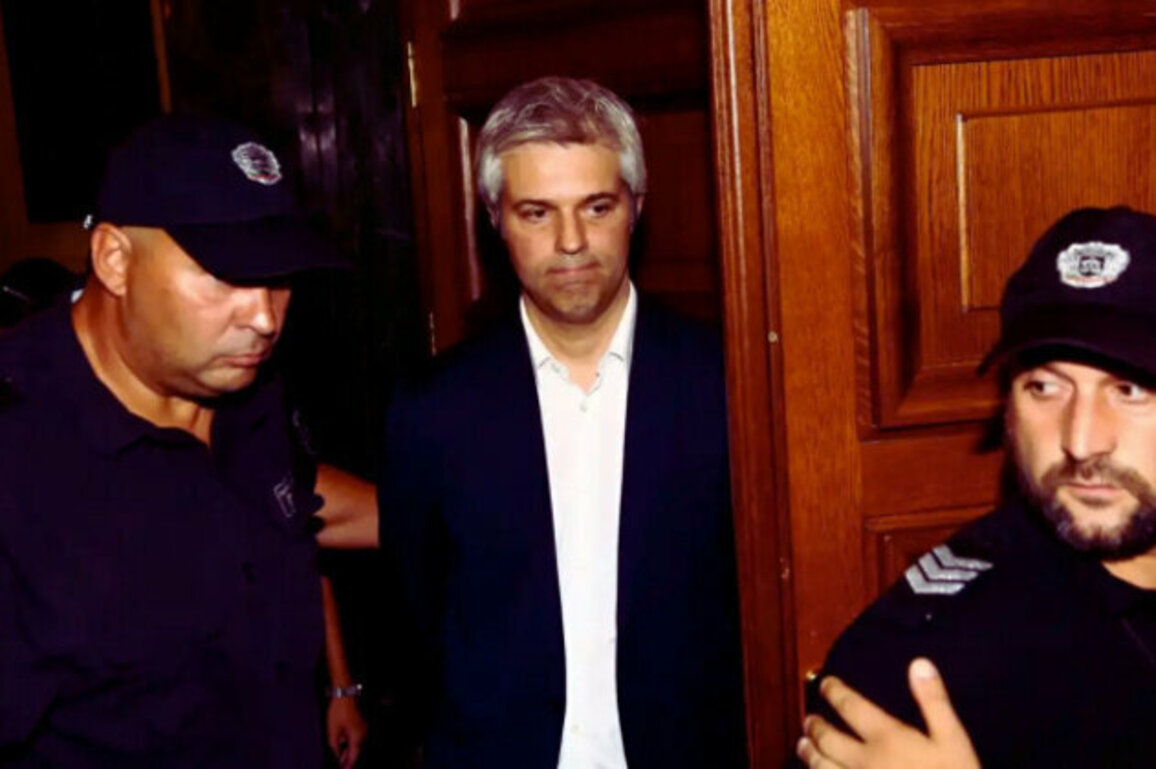
The Appellate Court in Sofia has ruled that Varna Mayor Blagomir Kotsev will remain in custody indefinitely. Judge Stefan Iliev cited a reasonable presumption that Kotsev committed the crimes he faces, noting that while there is no risk of him fleeing, his position as mayor creates a possibility of committing further offenses. The court's decision is final.
The detention of Kotsev, a member of the Renew Europe group, has prompted calls from MEPs to suspend EU payments to Bulgaria. Valrie Hayer, President of Renew Europe, sent a letter to the European Commission asserting that the Bulgarian government is manipulating the independent anti-corruption commission for political purposes. According to Hayer, the Anti-Corruption Commission has been turned into a tool for selective targeting of opposition figures, undermining democratic safeguards that are meant to ensure the independence of institutions.
This dispute coincides with the European Commission's review of Bulgaria's request for a ?653 million tranche under the Recovery and Resilience Facility (RRF). Bulgaria has already received ?1.37 billion of the ?6 billion allocated, with all RRF funds required to be disbursed by the end of 2026. A spokesperson for the Commission confirmed that the request, submitted at the end of July, is under review in close cooperation with Bulgarian authorities, though no comments were made on the Anti-Corruption Commission's actions pending completion of the assessment.
In her letter, Hayer described the imprisonment of Kotsev and three other opposition figures as evidence of institutional perversion. Kotsev, known for his pro-European and anti-Putin stance, is reportedly held under harsh conditions in a maximum-security prison, with restricted access to open space and case materials. The same treatment is being applied to a deputy mayor and two municipal councilors. According to the letter, these actions represent a politicization of law enforcement, turning an institution meant to uphold independence into a weapon against democratically elected officials. The situation in Varna, a strategically important city for NATO and EU security in the Black Sea, is highlighted as a potential target for destabilization by Russian influence.
Hayer also criticized Bulgaria's systematic failure to meet the IACP indicators outlined in the Recovery and Resilience Plan. She noted that the Anti-Corruption Commission lacks genuine independence, transparent appointment processes, effective cooperation with the European Public Prosecutor's Office, and external oversight by GRECO. Deliberate obstruction, including delayed investigations and concealment of public procurement evidence, further undermines the Commission's legitimacy. Additionally, Bulgaria's Chief Prosecutor remains in office beyond the constitutionally allowed term, aggravating institutional instability and politicization.
The letter emphasizes that EU funding should not finance political repression. Renew Europe urged the Commission to conduct a formal review of Kotsev and the other detained opposition figures, suspend the second tranche of RRF payments pending corrective action, and implement enhanced monitoring to ensure future compliance with democratic standards. The group stressed that disbursing funds under current conditions would support political persecution in a strategically significant city, damage the credibility of EU conditionality mechanisms, and indirectly aid Moscow's destabilizing efforts.
Renew Europe concluded that the Commission's primary responsibility is to ensure that EU support strengthens, rather than undermines, democratic governance in Bulgaria. The immediate suspension of payments is presented as the only responsible measure until Bulgaria's anti-corruption reform aligns with its intended democratic objectives.